Behind each reply
Live
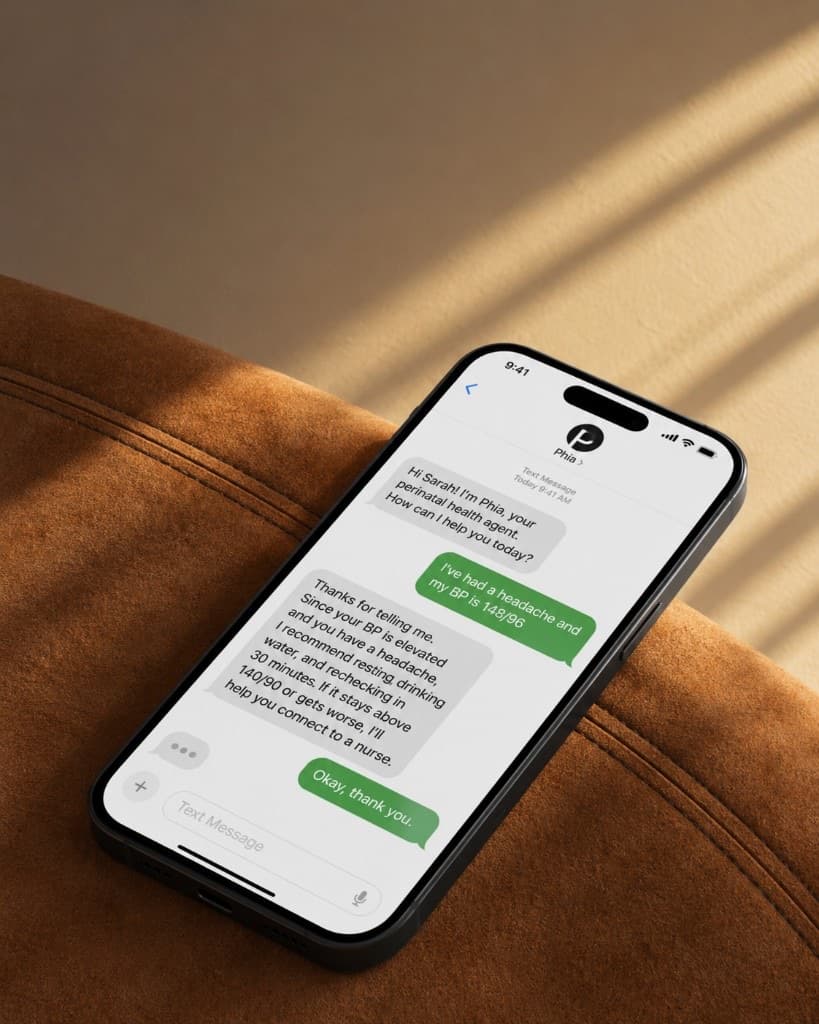



Every text sets something in motion. Phia checks for danger signs, writes down what changed, plans the next touch, brings in the care team — or decides to wait. This is the work behind each reply, and it changes every time Phia runs.
Running since September 2026 · Updated October 8, 2026
Scroll
Every figure below comes from Phia’s own action log: what it checked, recorded, planned and sent each time it ran. Only percentages are shown, and the page updates once a day.
40%
of the times she texted about a symptom, Phia added it to her symptom record for the care team to track
69%
of scheduled check-ins, Phia decided she didn’t need a text and held off
56%
of the texts she received were written by Phia; her care team wrote the rest
Chapter 1
What happens when she texts
Every time she texts, a follow-up comes due, or something changes in her chart, Phia wakes up and works through the same steps. The reply she sees is the last of them.
01 · wake
A text arrives
A new symptom, at 9:40 at night
02 · check
Danger signs
Any warning sign goes to the care team first
03 · record
What changed
The symptom goes on her timeline
04 · plan
The next touch
A check-in for tomorrow, decided again then
05 · reply
Then it replies
The text she sees comes last
Chapter 2
Most of the work isn’t the reply
A reply is the part she sees. Around it, Phia keeps her record current, checks what needs checking, and lines up whatever comes next, so the next text starts from where she is.
A run is each time Phia wakes up and decides what to do. Many runs are a simple answer to a simple question, so each kind of action shows up in some runs rather than all of them.
Figure 2.1
What Phia’s runs included
Share of runs that included each kind of action. A run can include several, so shares don’t add up to 100.
Keeping track
Recorded a milestone or symptom, or planned when to check in next
23%
Safety
Checked for danger signs, or brought in the care team or her provider
18%
Guidance
Looked up clinical guidance or her care plan before answering
7%
Paperwork
Sent intake, consent or a screening, or checked her service area
6%
Logistics
Appointments, phone calls, and help with food, housing or transport
5%
Chapter 3
What it was for
Phia reads every text she sends and sorts it by topic. Here is what the texts that set Phia in motion were about, and how it followed through.
Figure 3.1
What her text was about
Share of runs started by a text from her.
33%
When she texted about logistics, Phia checked for danger signs or brought in the care team.
20%
When she texted about everyday life, Phia kept track of a milestone or set a follow-up.

Chapter 4
Knowing when not to text
When Phia reaches out on its own, its first decision is whether she needs a message at all. A check-in she doesn’t need is one more thing on her phone, so often the right call is to wait.
Figure 4.1
How Phia’s own check-ins ended
Share of runs Phia started on its own, by whether it texted her or decided to wait.
Scheduled check-ins
Chapter 5
Working alongside the care team
Phia doesn’t work alone. The care team writes in the same thread, and Phia brings them in when a conversation needs a clinician.
Figure 5.1
Who wrote the texts she received
Share of texts sent to her.
About these numbers
- Drawn from Phia’s own action log, with test and staff accounts removed.
- Topics come from what she wrote; actions come from what Phia did next.
- Only percentages are published, never totals. Every figure stands for at least 11 women, and no text, name or reasoning is ever shown.
- The page updates once a day.